- Executors
- How To
- Estate Planning
How to Choose the Right Executor for Your Will
Learn how to choose the right Executor for your Will. Understand what an Executor does, who makes a good choice, and how to add Executors, Co-Executors, and Backup Executors using Will Hero.
Choosing the right Executor is one of the most important decisions you'll make when creating a Will. Your Executor is the person (or people) legally responsible for managing your estate, protecting your assets, and ensuring your wishes are carried out exactly as written. Wondering what happens if your executor dies before you? See [what happens if my executor dies before me](/blog/what-happens-if-my-executor-dies-before-me/).
Quick Overview
An Executor is the person you appoint in your Will to manage your estate, pay debts, and distribute your assets according to your wishes. Choose someone you trust completely, who is organised and capable. Most importantly, always add Backup Executors — this is one of the most critical steps in protecting your estate. If your primary Executor cannot act, your Backup Executor steps in to ensure your wishes are still carried out.
In this guide, we explain what an Executor does, who makes a good choice, when you should consider Co-Executors or Backup Executors, and how to easily add them using Will Hero. We’ll also show you how Will Hero allows you to add unlimited levels of Backup Executors for complete peace of mind.
Key Takeaways
- •An Executor manages your estate, pays debts, and distributes assets according to your Will
- •Choose someone you trust completely who is organised, reliable, and willing to act
- •Always add Backup Executors — this is essential to protect your estate if your primary choice cannot act. Without backups, the court may appoint someone who doesn’t know your wishes.
- •Will Hero allows you to add unlimited levels of Backup Executors, so you can plan for multiple contingencies and protect your estate for generations
- •Co-Executors can share responsibility but require cooperation and agreement
- •Will Hero’s Visual Will and Review My Will features help you plan and validate your Executor choices
What is an Executor?
An Executor is the person you appoint in your Will to:
- Locate your Will — Find and access your Will document
- Collect and secure your assets — Identify and protect all your property, money, and belongings
- Pay outstanding debts and taxes — Settle any bills, loans, or tax obligations
- Apply for probate (if required) — Obtain a Grant of Probate, which is the legal authority to administer your estate
- Distribute your estate according to your instructions — Give assets to your chosen beneficiaries
It’s an important administrative role — but it doesn’t require legal or financial qualifications. Most people choose a trusted family member or friend. Learn more about what happens if you die without a Will and how intestacy laws affect estate distribution.
The Executor’s role typically involves paperwork, communication with banks and government agencies, and following your written instructions. While it can be time-consuming, it’s usually straightforward for someone who is organised and reliable.
Your Executor doesn’t need to be wealthy or have special qualifications — they just need to be trustworthy, responsible, and willing to take on the role.

What Are Co-Executors?
Co-Executors are two or more people who share the responsibility of administering your estate. You might choose Co-Executors when:
- You want decisions to be made jointly — Multiple people must agree on key decisions
- You want to balance responsibilities between siblings — Prevents one person from bearing all the burden
- One Executor has strengths the other does not — For example, one has financial skills while the other has practical skills
- You want accountability between Executors — Having multiple Executors can provide checks and balances
Co-Executors must agree on key decisions, which can be helpful — but also slower if they disagree. For simple estates or clear instructions, a single Executor is usually easier.
Co-Executor Considerations
What Are Backup Executors?
A Backup Executor (also known as an alternate or substitute Executor) is the person who steps in if your primary Executor:
- Cannot act — Due to illness, incapacity, or other circumstances
- Does not want to act — Refuses the role when the time comes
- Has passed away — Dies before you or before completing the administration
- Has become ill or unsuitable — No longer capable of handling the responsibilities
Appointing Backup Executors is not optional — it’s essential. Without them, if your primary Executor cannot act, your estate faces delays, additional costs, and uncertainty. Will Hero makes it easy to add backups during your setup process, and uniquely allows you to add unlimited levels of Backup Executors for complete long-term protection.
Why Backup Executors Are Essential
Without Backup Executors, if your primary Executor cannot act, the court may need to appoint an administrator. This can cause:
Adding Backup Executors is one of the most important steps you can take to protect your estate. Learn more about what happens if your Executor dies before you and how Backup Executors protect your estate.
Will Hero’s Unlimited Backup Executors
Most online Will platforms only allow one or two Backup Executors. Will Hero is different — you can add unlimited levels of Backup Executors, creating a complete safety net for your estate:
This unlimited backup structure means you can plan for multiple generations, ensuring your estate is always protected no matter what happens. Your Visual Will interface shows your complete Executor chain at a glance, so you can see exactly how your backups are structured.
Who Makes a Good Executor?
When choosing the right Executor, consider these key qualities:
1. Someone you trust completely
Your Executor will manage your assets and access sensitive financial details. They need to be someone you trust implicitly to act in your best interests and follow your wishes exactly.
2. Age and long-term availability
Pick someone likely to outlive you and who is capable of managing paperwork and decisions. Consider their current age, health, and life circumstances.
3. Financially responsible
They do not need to be wealthy — just organised, reliable and good with deadlines. Someone who pays bills on time, keeps records, and manages their own finances well is ideal.
4. Emotionally steady
Administering an estate happens during a difficult time. Someone calm and objective is ideal. They’ll need to handle family dynamics, make decisions under pressure, and communicate clearly with beneficiaries.
5. Proximity (optional but helpful)
An Executor who lives nearby can more easily manage practical tasks (property access, bank visits, speaking with professionals). However, modern technology makes remote administration more feasible than ever.
Important note about residency requirements: If your Executor lives overseas, they may face practical limitations. Some Australian states (including NSW and Victoria) prefer or require an Australian resident Executor when applying for probate. While overseas Executors are generally allowed, the probate process can be more complex. Consider choosing an overseas Executor with local Backup Executors who are Australian residents to simplify the probate process. For state-specific executor rules and eligibility, see our Who can be an executor in Queensland guide.
6. Willingness to act
Always choose someone who agrees to take on the role. Discuss the responsibilities with them before naming them in your Will. This ensures they understand what’s involved and are prepared to act when needed.
Important legal note: Executors can be personally liable for mistakes made in administering an estate. While this is rare for straightforward estates, Executors should seek legal or accounting advice if they’re unsure about any aspect of their duties. These professional fees can typically be paid from the estate, not from the Executor’s personal funds.
Ready to add your Executor? Will Hero makes it simple to choose and add your Executor, Co-Executors, and Backup Executors with proper legal wording for your state or territory.
Common Mistakes to Avoid When Choosing an Executor
When selecting your Executor, avoid these common pitfalls:
For a comprehensive guide to all common Will mistakes (including executor mistakes and many others), see our detailed article: Common Mistakes People Make When Making a Will (And How to Avoid Them).
- Not discussing the role beforehand — Always ask your chosen Executor if they’re willing to take on the responsibility before naming them in your Will
- Choosing someone too old or in poor health — While age isn’t a barrier, consider whether they’ll be able to handle the role when needed
- Selecting someone who lives far away — While not impossible, remote Executors face practical challenges with property access, bank visits, and local requirements
- Not appointing Backup Executors — This is one of the most critical mistakes. Always have at least one Backup Executor to protect your estate if your primary choice cannot act. Without backups, your estate faces court-appointed administrators, delays, and additional costs. Will Hero allows you to add unlimited Backup Executors, so you can create multiple layers of protection.
- Choosing someone who may have conflicts of interest — While Executors can be beneficiaries, ensure they can act impartially if there are multiple beneficiaries
- Not updating your Executor over time — Review your Executor choice periodically, especially after major life changes like divorce, relocation, or if your Executor’s circumstances change
- Not telling your executor where your Will is stored — Your executor needs to find the original; see where to store your Will for safe options.
Common Executor Choices (and Pros/Cons)
Here’s a quick comparison of the most common Executor choices to help you decide:
| Executor Choice | Pros | Cons |
|---|---|---|
| Spouse or Partner | Knows your wishes well, simplest choice, familiar with assets | Administration burden during emotional time. Consider Co-Executors or Backup Executors. |
| Adult Child | Responsible, familiar with assets, long-term family interest | Could create conflict if siblings disagree. Consider Co-Executors or one child with others as beneficiaries. |
| Two Children as Co-Executors | Shared responsibility, perceived fairness, complementary skills | Requires cooperation; delays if they disagree. Ensure they can work together. |
| Close Friend | Neutral choice, objective, removed from family conflicts | May become burdensome long-term, may not know assets well. Ensure willingness and ability. |
| Professional Executor | Expertise, neutrality, handles complex estates, available long-term | Higher cost (often thousands of dollars). Many choose as final Backup Executor rather than primary. |
How to Add Executors in Will Hero
Will Hero makes it simple to add your Executor, Co-Executors or Backup Executors.
Inside the platform:
- Start your Will or open your saved draft — Begin creating your Will or continue where you left off
- Go to the Executor section — Navigate to the Executor step in the Will creation process
- Click an Executor and enter their details — Name, relationship and contact information
- Choose Co-Executors if you want more than one — Add multiple Executors who will act together
- Add Backup Executors (essential for all Wills) — Add one or more Backup Executors who step in if needed. Will Hero allows you to add unlimited levels of Backup Executors, so you can create a complete safety net for your estate. For example, you might add Backup Executor 1 (your adult child), Backup Executor 2 (a trusted friend), Backup Executor 3 (a professional trustee company), and so on. Trustee companies (e.g. State Trustees, Public Trustee) typically charge a percentage of the estate or a flat fee of several thousand dollars; they’re a useful last-resort fallback when no family member can act.
- Review your Will — Use Will Hero’s Review My Will feature to validate your Executor choices and ensure everything is correct
Your chosen Executor(s) will automatically appear in your final document, along with the correct legal wording for your state or territory. The unlimited Backup Executor feature is unique to Will Hero and gives you complete control over your estate’s protection.
Visual Will Interface
Will Hero’s Visual Will interface makes it easy to see your Executor structure at a glance. You can see your primary Executor, Co-Executors, and all Backup Executor layers in one clear diagram.
This visual approach helps you understand how your Executor chain works and ensures you’ve planned for all contingencies.
Test Your Executor Choices
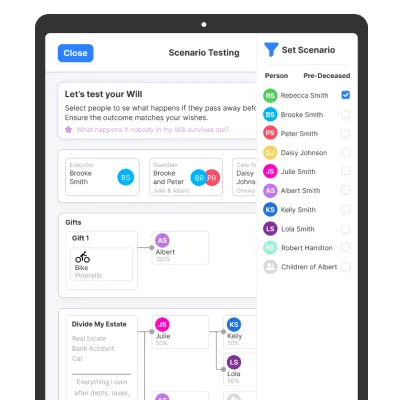
Use Will Hero’s Scenario Testing feature to see how your Will works in different situations. What happens if your Executor can’t act? How do your Backup Executors step in?
Scenario Testing helps you verify that your Executor planning is robust and your estate is protected no matter what happens.
Summary
Choosing the right Executor is one of the most critical decisions in your Will. Your Executor will be responsible for managing your estate, paying debts, and ensuring your wishes are carried out exactly as you intended. Whether you choose a spouse, adult child, friend, or professional Executor, the key is selecting someone you trust completely who is organised, reliable, and willing to act.
Key points to remember:
-
Can a family member be an Executor? Yes — in fact, most people choose a trusted family member or friend as their Executor. There’s no legal requirement for professional qualifications.
-
Executor responsibilities in Australia include locating your Will, collecting assets, paying debts, applying for probate if required, and distributing your estate according to your instructions.
-
Always add Backup Executors — this is essential, not optional. Without Backup Executors, if your primary Executor cannot act, the court may appoint someone who doesn’t know your wishes, causing delays, additional costs, and uncertainty. Will Hero allows you to add unlimited levels of Backup Executors, creating a complete safety net that protects your estate for multiple generations.
-
Consider Co-Executors if you want shared responsibility and decision-making, especially for complex estates or when balancing responsibilities between family members.
Will Hero’s Visual Will interface helps you see your Executor structure at a glance, while Review My Will validates your choices before you finalise your document. With proper planning and the right tools, choosing and adding your Executor can be straightforward and stress-free.
Ready to Choose Your Executor?
Will Hero makes it easy to add your Executor, Co-Executors, and Backup Executors with proper legal wording for your state or territory. Start creating your Will today and see how simple Executor selection can be.

Frequently Asked Questions

John Ryan
Co-Founder & Estate Planning Advocate at Will Hero
About Will Hero
Will Hero is an Australian online Will platform that provides state-specific Will templates designed around Australian succession law. Documents are created using guided software and reviewed against jurisdiction requirements used across the platform. Thousands of Australians have used Will Hero to prepare their Will online.
Will Hero provides general legal information and document preparation tools and is not a law firm or a provider of personalised legal advice. The platform is intended for use by Australian residents making a Will under Australian state law.
Related Articles



Ready to create your Will? Start here · By state